Spatial Intelligence: from Table-top to City-scale
The 4th Perception Test Challenge at ECCV 2026
Do large multimodal models truly understand the spatial structure of the world they perceive? Given that they are largely trained on passive, internet-scale data, how do they represent environments across scales, from the tabletop in a tea preparation video to the city-scale layout of an hour-long walking tour?
Put your model to test and win prizes totalling 20K EUR!
NEW this year: KilometerVision track probing spatial intelligence in walking tour videos, including questions on distance estimation, landmark recognition, compass, map understanding.
NEW this year: KilometerAudio track probing multimodal audio-video understanding in hour-long walking tour videos.
Challenges
Keynote Speakers
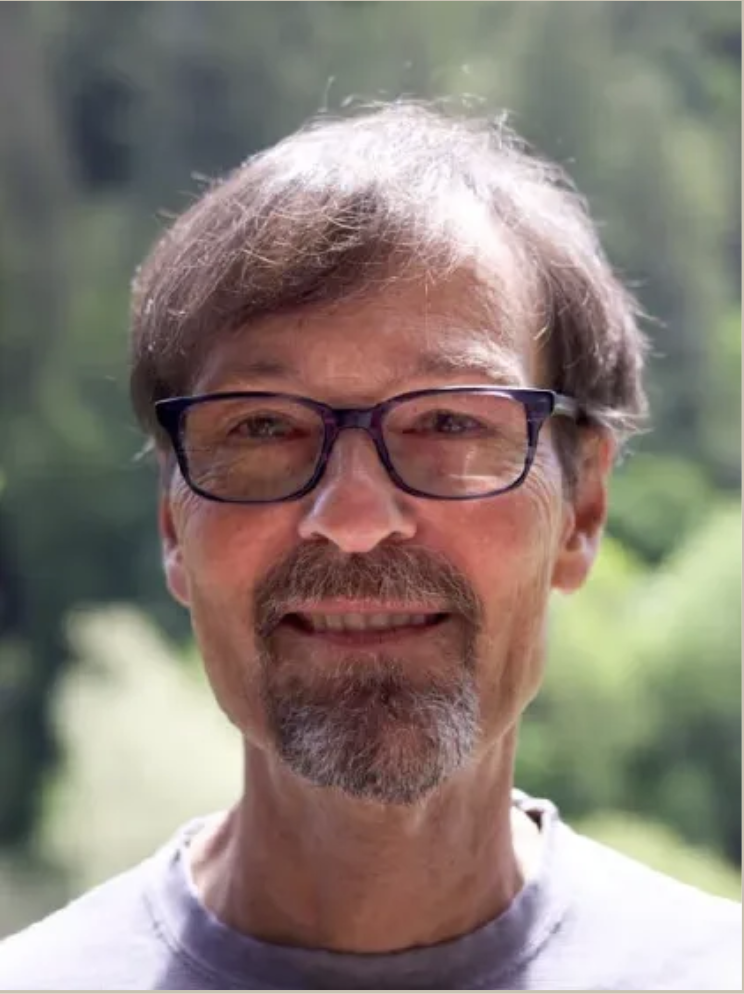
Active navigation and the human brain
Humans are remarkably good at navigation, but most studies of human navigation use sparse environments and simple tasks that do not fully assess naturalistic navigation. Here we sought to recover and characterize the human navigation network more completely. Participants first learned to navigate in a large virtual reality city, and then performed a taxi driver task in the MRI scanner. Brain activity was modeled in terms of 38 separate feature spaces spanning many different aspects of navigation. Results show that naturalistic navigation is supported by a network of 11 distinct regions distributed across visual, parietal, and prefrontal cortices, and organized into functional gradients that transform perception to motor responses. To understand how the human network differs from deep neural network (DNN) models for navigation, we modeled the brain data using features drawn from two navigational DNNs, Learning from All Vehicles and InterFuser. In both cases the perception and action modules explain substantial variance in the brain data, but the internal modules that transform perceptual inputs to action outputs explain little brain variance and they map inconsistently across participants. These results suggest that DNNs may not navigate as efficiently as humans because they do not use human-like algorithms or representations.
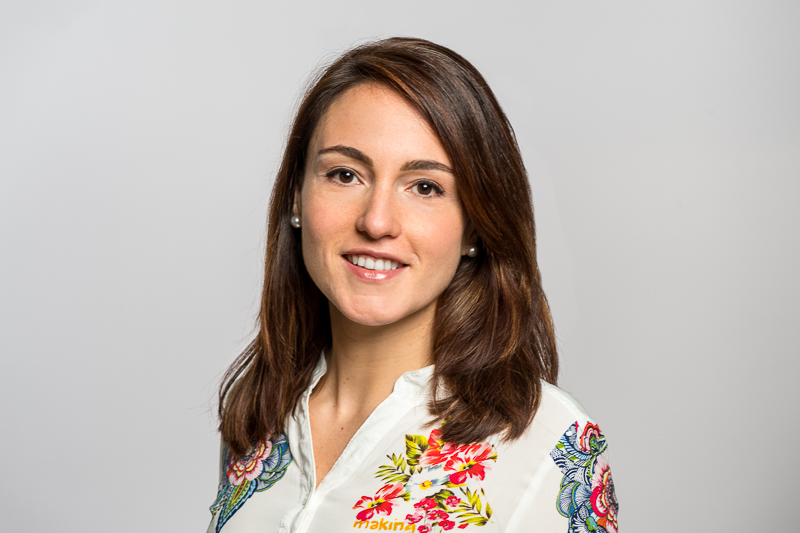
Title TBA
Abstract to be announced soon.
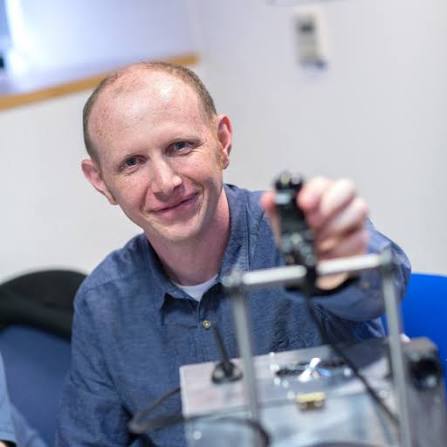
Workshop Agenda
- 09:00 - 09:10 Welcome and introduction (Joao Carreira / Andrew Zisserman)
- 09:10 - 09:30 Challenge overview (Viorica Patraucean)
- 09:30 - 10:00 Keynote (Laura Leal-Taixé)
- 10:00 - 10:30 Coffee break
- 10:30 - 11:00 Keynote (Andrew Davison)
- 11:00 - 11:40 Challenge results
- 11:40 - 12:10 Keynote (Jack L. Gallant)
- 12:10 - 12:30 Concluding remarks
The Fourth Perception Test Challenge Winners
We received 1,439 submissions from 125 teams across the four tracks. Congratulations to all the award-winning teams! We awarded a winner and a runner-up prize in each track, highlighted the best performing entry where the top score came from a team not eligible for a prize, and awarded a Best Generalist prize to the team with the strongest results across all tracks. Read the full analysis in our 2026 Challenge Summary Report (arXiv); technical reports of the award-winning solutions are linked below.
Unified multiple-choice videoQA
- Winner: Team Njust-KMG (Yuhan Zheng, Fengqiang Wan, Yang Yang) report
- Runner-up: Team F423 (Xujiang Chen) report
Grounded videoQA
- Winner: Team Banana Bats (Minseon Park, Jian Kim, Inhong Paek, Changwoo Jeon, Jaeyun Shin, Jong Chul Ye) report
- Runner-up: Team Huawei SpaceMind (Gabriel Turbinca, Yuheng Zhou, Jialei Xu, Zizhuang Wei) report
KilometerVision
- Best performance: Team CloudAI-evolve (Venkata Sai Nikhil Thodupunuri, Ravi Vayuvegula) report and slides
- Winner: Team ohmyyuan (Yu-An Lu) report
- Runner-up: Team Huawei_SpaceMind (Gabriel Turbinca, Yuheng Zhou, Jialei Xu, Zizhuang Wei) report
KilometerAudio
- Best performance: Team CloudAI-evolve (Venkata Sai Nikhil Thodupunuri, Ravi Vayuvegula) report and slides
- Winner: Team IUCV (Edred Azziz, Juhyung Ha, David J. Crandall) report
- Runner-up: Team WW11 (Yuyang Sun, Yu Zhang, Xiaogang Wang, Xiao Dong, Bing Wang, Bin Song, Xuping Zhu, Bin Zhang, Kent Shen) report
Best Generalist
- Best Generalist: Team Wind_Rain_Tower (Du Jingtao) — competed in all four tracks report
Challenge Timeline
- June 20: Challenge server with validation tasks goes live
- July 15: Test data and tasks released
- August 27: Deadline for submissions
- August 31: Deadline for tech report submissions
- September 3: Decision to participants
Organizers